




Quality System: When the procedures exist, but no one can prove they are followed

Most businesses have procedures. They are kept in a folder, often with a name like «Procedures_updated_2023». The problem isn't that the procedures are missing. The problem is the gap between what is written down and what people actually do.

Everyone is good at documenting. But when it comes to implementation, it falls apart. Nobody works as written in the procedure. They read it once during onboarding and haven't read it since.

It's a pattern we see in almost every company we speak with. The quality system exists on paper. In practice, people work as they always have.

It's a pattern we see in almost every company we speak with. The quality system exists on paper. In practice, people work as they always have. Especially in project-based businesses with 10 to 100 employees, where
ISO requirements come from customers, tenders or the industry itself.

Why the gap arises

It's rarely a lack of will. It's the tools. When procedures are buried three clicks away in a document, people don't use them. When deviations need to be reported in a separate form that no one can find,
They are not reported. As the audit approaches, a frantic tidying up begins instead of a calm review.

A plumbing and heating company described it like this: «We're struggling with document management. We could do better. We need one place where the checklist will live, where Excel sheets will live, so people aren't using duplicated or
different versions of the same documents all the way through.»

A quality system only works when it's part of the daily grind. Not something people switch on before an audit.

What a quality system actually has to do

ISO 9001 stiller krav til dokumentstyring, afvigelseshåndtering, sporbarhed og at I rent faktisk forbedrer jer over tid. Men standarden siger intet om, hvordan I skal gøre det i praksis. Det er der de fleste virksomheder kæmper.

A quality system that works must do four things:

The procedures must live where the job is done. Not in a separate folder, but inside the project, in the checklist, in the task. When the fitter out in the field opens the project, the procedure should be there.

Deviations must be easy to record. If it takes ten minutes to fill out an incident report form, only the most significant errors are recorded. The rest disappear.

Documents must have version control. When someone updates a procedure, everyone must work on the latest version. No exceptions.

Management must see the status without asking. Open deviations, missing checklists, delayed deadlines. The answer should be found without anyone creating a report.

Quality Systems in Practice: Two colleagues discuss quality management at the office.

Quality system in Business Online

Online Business Without KHMS module built for businesses that need a quality system in their day-to-day operations. Not just when the auditor comes.

ISO 9001 stiller krav til dokumentstyring, afvigelseshåndtering, sporbarhed og at I faktisk forbedrer jer over tid. Men standarden siger intet om, hvordan I skal gøre det i praksis. Det er her de fleste virksomheder kæmper. Ifølge McKinsey Companies that map and eliminate recurring non-conformities can reduce the number of problems by 65%.

Document management. Procedures, manuals, and work instructions with version control and approval workflows. All jobs use the latest approved version. When something is updated, relevant parties are notified.

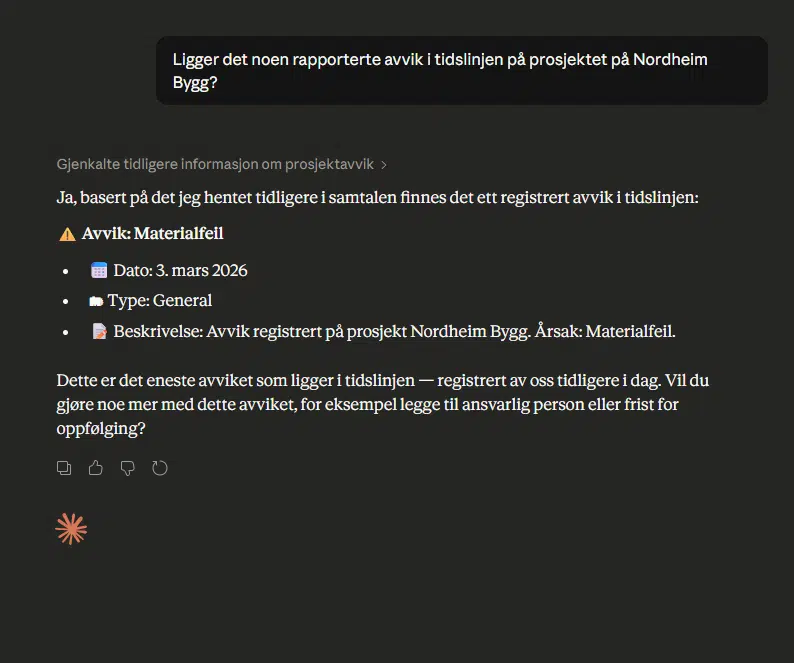
Deviance management. Register deviations directly in the system. Each deviation will be assigned a responsible person, deadline, and status. Management will see all open deviations without having to request them.

Quality control plans that follows the project from start to finish. Each checkpoint is documented with who performed it and when. For projects where «that's how we usually do it» is not sufficient documentation.

The link between quality and projects. Deviations, checklists and documents are submitted within the project they belong to. Not in a separate quality system on the side. The project manager and the quality manager work on the same platform.

All built on Microsoft 365. The team works in Outlook, Teams, and SharePoint as before, but with the quality system around it.

From three ways of working to three ISO certifications

Lie Blikk in Stavanger grew from 60 to over 100 employees. They had procedures and a quality system, but it wasn't working with a hundred employees. «We worked one way in the calculation phase, another way in the design phase, and a third way in the execution,» said Eirik Kvilstad Heskja.

They achieved three ISO certifications simultaneously: 9001, 14001, and 45001. The QCPs in Business Online became the tool that put the quality requirements into practice. The procedures were turned into concrete checkpoints in each project.

 «The QCP is the biggest advantage we've gained,» said Heskja.

The growth is picking up speed, but it's no longer painful.

The stock market listing that proved the quality system holds up

Soiltech tripled its revenue from 80 to 275 million in a few years. They chose to put the quality system in place before the growth took off.

«The greatest value is the project management module, specifically the Quality Control Plan. It is crucial for us. One system, aligned practice, less margin for error,» said Else-Karin Vådeland, VP HSSEQ &
Sustainability.

When Soiltech went public in 2024, the quality system was put to the test: «The stock market listing was a thorough test of documentation tracking, risk management, and internal control. Where you have to prove, not just state, that the processes are robust. We proved that.»

The quality system that passed the stock market listing

Soiltech chose to establish the structure before growth took off. When the IPO came, it was the quality system that proved the processes were sound.

What changes in the first six months

The first few weeks are about moving procedures and documents into the system. It takes some effort, but it's a one-off job.

After a month, deviations start to be recorded continuously rather than retrospectively. The quality manager observes what is happening without prompting it.

After three months, the quality system is part of everyday life. Project managers use the checklists because it's easier than the alternative. Not because anyone is nagging.

When the next revision comes, the documentation will already be there. No fire drill.

A quality system should make everyday life easier

Quality is not about satisfying an auditor. It is about the job being done the same way every time, regardless of who does it. A quality system that only appears before an audit is not a quality system. It's a procedure manual.

Is the quality system ready for the next audit?

Most companies we speak with know that their quality system should work better. The question is just when you're going to do something about it. Book a meeting, and we'll show you what it looks like for similar companies.
Dinner. 30 minutes, no strings attached.