


Put the foundation before the growth - this is how Soiltech got a common way of working
As the technology company tripled its turnover from around SEK 80 million to SEK 275 million in just a few years, the pace and demands increased. Nevertheless, they maintained an overview and managed to unite the organisation around common processes and working methods, with up-to-date documentation available to everyone. This made it easier to handle the growth - and not least the IPO in 2024.
This customer story is an example of how structure, established practices and a common management system can make growth more manageable.

About Soiltech
Soiltech is a technology-based turnkey supplier of waste management services to the oil and gas industry. The company uses the Business Online management system to manage quality, documentation and project-based work.
Soiltech manages, treats and recycles contaminated water and solid waste using mechanical solutions without the use of chemicals. The technology is energy-efficient, scalable and designed for high capacity in demanding operations.
Challenge
With employees spread across several locations, both nationally and internationally, Soiltech needed effective collaboration across the organisation. The combination of offshore and onshore work placed extra high demands on control of information flow, structure and confidentiality.
When many people are working in parallel on projects, it's crucial to know what information is current, where it can be found and who has access to what.
Solution
The shared management system Business Online provides Soiltech with a common way of working across projects, roles and locations. The solution is flexible and easy to customise, allowing it to grow with the business. Clear access management also ensures control over who has access to what information.
Result
With one common structure and established practices, Soiltech has a good overview and effective collaboration across the organisation. When projects and documentation are gathered in one management system, everyone works from the same starting point.
This put the company in a better position for growth and the IPO in 2024.
Building the structure before the growth came
Soiltech handles and treats contaminated water and solid waste for the oil and gas industry, with strict requirements for safety, quality and documentation. Many growing companies manage this with spreadsheets, emails and disconnected systems. Important information is left in employees' email inboxes and they don't always know if they're working on the latest version of a document.
Soiltech chose to set itself up differently - early on.
Even before growth took off, they standardised how they worked and gathered processes, quality and documentation in a common management system. The aim was to ensure that procedures were not just stored in a quality system, but used in the same way every day, regardless of where in the world people worked.
"I've worked with KHMS [quality, health, safety and environment] for more than 17 years in the oil and gas industry, where I've experienced the challenges associated with communication and collaboration. The challenges have often been related to the fact that you don't just have one system. HR, KHMS and operations are in separate databases, and these systems don't talk to each other.", says Else-Karin Vådeland, VP HSSEQ & Sustainability at Soiltech.
When she entered Soiltech, she faced a different situation.
A common backbone across countries and operations
The common management system they chose at the time is Business Online, which Soiltech now uses to manage projects and quality across countries, rigs and operations.
"No matter what project you manage, or where you manage it from, you have the same information", says Vådeland.
At the core are Quality Control Plans - checklists and workflows that ensure all steps in an operation are done in the same way. This means that established practices are actually followed in the projects, not just on paper.
"The greatest value is the project management module, the Quality Control Plan. It's crucial for us. So one system, same practices, less room for error. It makes me sleep better at night.", she says.
For new employees, the system is described as the company's common backbone, where they find procedures, risk assessments, quality assurance and links to deviations.
Deviations and observations are registered in the same system as the projects, instead of living in separate Excel sheets or emails. Emails and attachments can be linked directly to the right project room, so important communication is not hidden in individual inboxes. At the same time, the document library and document management ensure version control, so that everyone works in the same, approved version - with the history available if something needs to be traced back.
In this way, the entire organisation has access to correct, up-to-date information. Thus, improvements become part of the way Soiltech works.
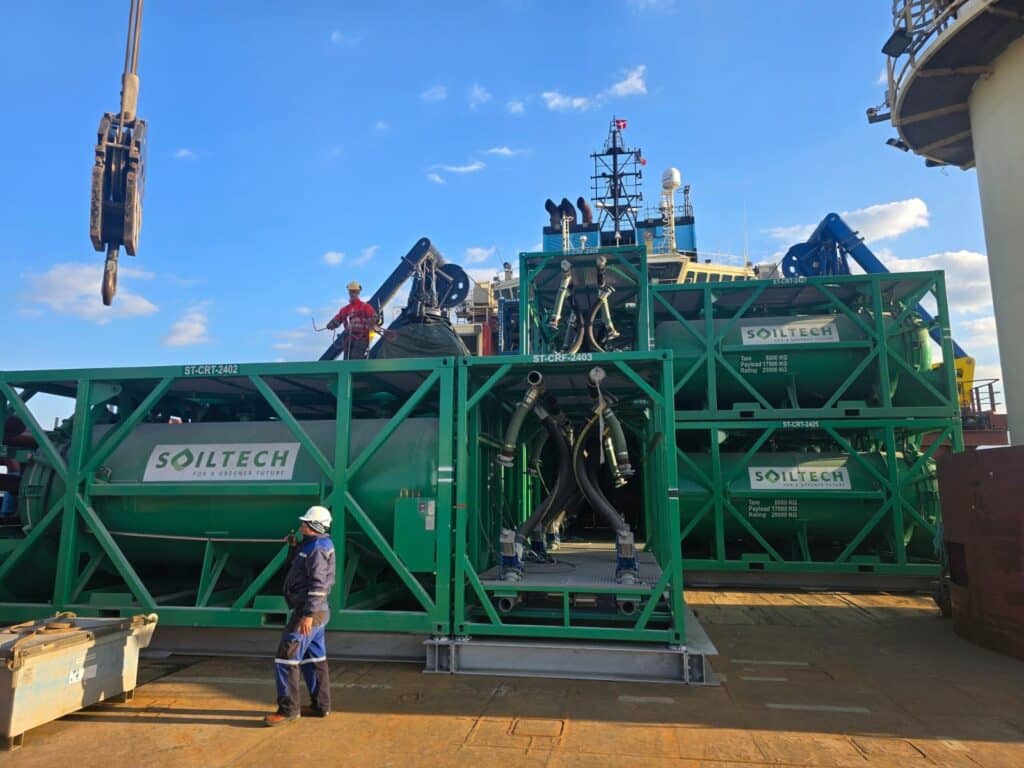
For Soiltech, good collaboration was also about reducing complexity in an increasingly complex organisation. With projects employing both offshore and onshore staff, nationally and internationally, it was important to be able to bring the disciplines together in one common workspace.
In the industry in which Soiltech operates, good information flow and structure are critical. Offshore, you work closely with other players - sometimes even competitors - on the same installation and rig. This means that it must be absolutely clear what information is shared where, and who has access to what.
"All the courses are now in Business Online, so everything is ready to communicate and share. It's generally an easier way to work.", says Vådeland.
By gathering projects, documentation and disciplines in one system, the company gained a common starting point for interaction, regardless of role and location.
"Offshore, we work together with several others, including competitors who may be on the same installation and on the same rig. We have to be extremely structured in what information is shared where.", she points out.
That's why access management and confidentiality were key requirements when the system was chosen. It had to be possible to share the right information with the right people, without compromising on security or control.
"I feel comfortable that we have confidentiality on things. You can lock down what you need and open what you need.", adds Vådeland.
Structure that actually works in everyday life
For Soiltech, it was not enough to establish good processes and a clear structure. For the management system to actually work on a day-to-day basis, it had to be easy to use - both for managers and for operational roles out in the projects.
When the pace is fast and many people are working in parallel, a good overview is crucial. Information must be easy to find again and it must be clear what the current practice is.
"I have a much better overview. It's easy to find things again because the structure is good. I'm a «checklist person» by nature, so I like things to be organised. I like standardisation and that's what this system is.", says Vådeland.
Soiltech works on a project basis and therefore uses customised quality checklists actively in its projects. This way of working was new to Vådeland, compared to previous management systems she has used.
"Business Online is easy to customise to our needs. I'd say that's a huge plus. Business Online «forces» you to work according to a pattern to a certain extent, but there's still flexibility in the system and that's great.", she points out.
The combination of a fixed framework and customisation options has made it easier to ensure consistent practice, without the system being perceived as rigid in use.
Collaboration with better flow in everyday life
For Soiltech, collaboration across roles and functions has been part of the way they've worked right from the start. With one common workspace, they have avoided interactions being characterised by email threads, attachments and parallel document versions, even when the pace has increased.
Instead of documents being sent back and forth, work can be gathered in separate projects where several people work on the documents at the same time. This improves the flow of work and minimises interruptions in everyday life.
"We spend less time, because we update «live» in a document. It's a small thing, but it makes our everyday life so much easier", says Vådeland.
When projects, documents and communication are centralised in the same structure, it becomes easier to collaborate across roles and functions. Everyone works with the same starting point and the same overview.
"I find it easy and enjoyable to work in Business Online, and I like that there are always opportunities. It's user-friendly, easy to collaborate in and tidy.", she says.
In this way, Soiltech has facilitated effective collaboration, without structure and control being at the expense of flexibility in everyday working life.
Structure put to the test
When Soiltech, after several years of strong growth, went public in the autumn of 2024, they were able to test how the structure and management system worked when the requirements for documentation and internal control were extra high.
"The IPO was a rigorous test of documentation tracking, risk management and internal control. Where you have to prove, and not just say, that our processes are robust. That's what we proved.", says Vådeland.
The CFO and others who don't work in the system on a daily basis had to enter and retrieve governing documents, procedures, checklists and manuals.
"I realised that it was very easy to guide them to the governing documents. Everything is here. Procedures, checklists, forms, how we do things. The system made it tidy and easy to find the documentation we needed.", she says.
Growth without losing your footing
Today, Soiltech continues to grow with more international projects and increased demands from customers and authorities. For many, this can make the working day more confusing. In Soiltech's experience, growth is more controlled when the structure is in place.
"We realise that we're growing, which may mean that we need to build on and expand our structure. But then we have an established foundation, so we just have to build on it. We've found that to be quite easy.", says Vådeland.
"We had Business Online in place before our growth took off. This means that we can now scale without stressing the organisation. The structure is already there, we're just building on it.", she concludes.
With Business Online as the foundation, Soiltech has been able to handle a large increase in activity and maintain an overview, while the company is well equipped for further growth.
Do you want the same structure as Soiltech?
We'll show you how Business Online can work for you. Just 30 minutes, no obligations.